How to clean an oven (the baking-soda method that actually works)
How to clean an oven with a baking-soda paste — step by step: overnight paste, racks in the tub, door glass, and an honest take on the self-clean cycle.
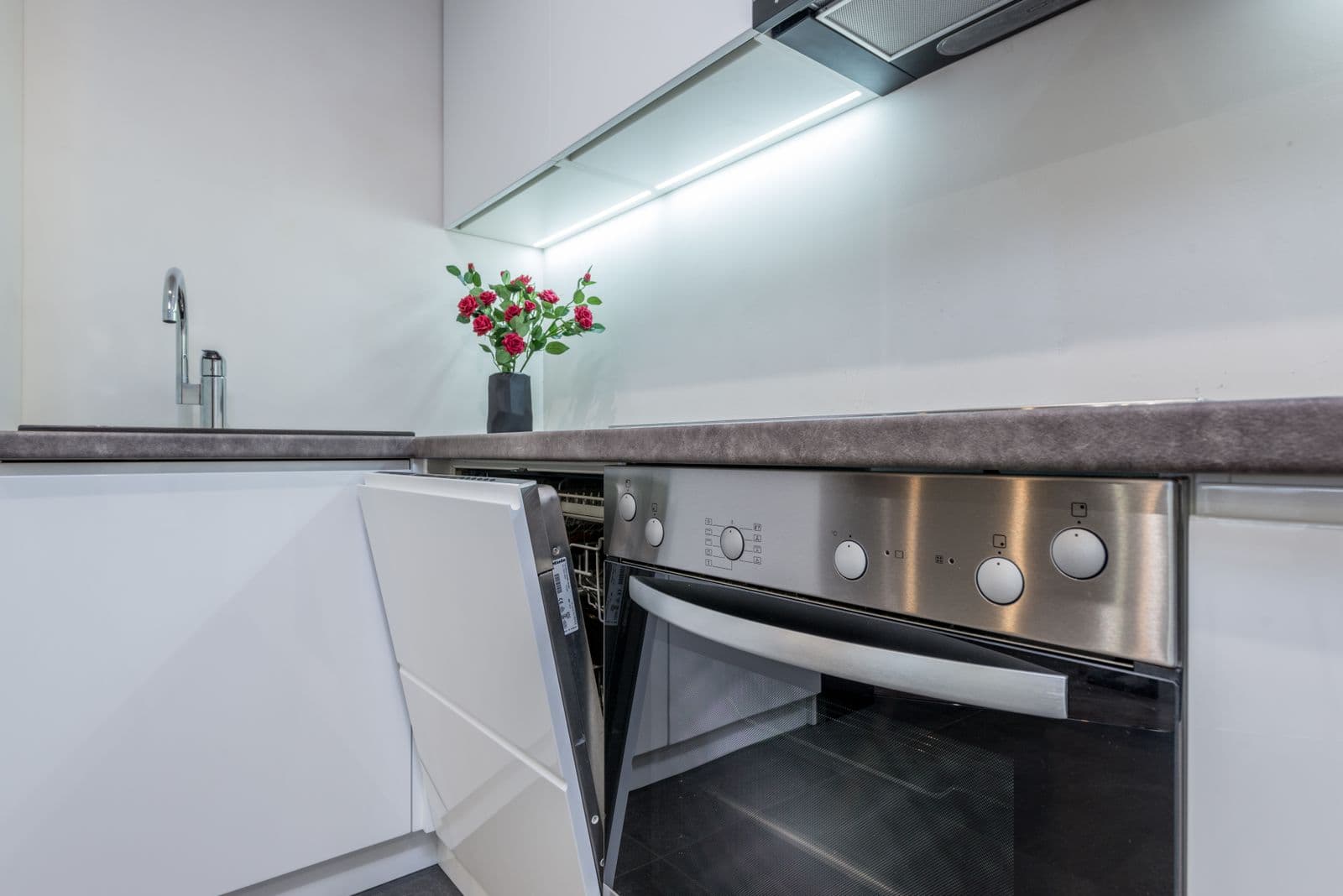
You don't need a can of fume-heavy oven cleaner to get your oven genuinely clean. A baking-soda paste left on overnight, finished with a spray of vinegar, dissolves baked-on grease using about a dollar's worth of pantry staples — no gloves-and-open-windows chemistry required. Here's how to clean an oven start to finish — racks and door glass included — plus an honest take on the self-clean cycle and how to tell when the job has moved past DIY.
Why skip the heavy-duty oven cleaner
Aerosol oven cleaners are built around lye (sodium hydroxide) — that's why they cut through carbonized grease so fast, and also why the label tells you to wear gloves, ventilate the room, and keep the spray off your skin. In a home kitchen, that's a lot of caustic chemistry for a box you cook dinner in. Every trace has to be rinsed out before the next use, the fumes hang around, and overspray lands on floors and counters.
There's a bigger catch: if your oven has a self-clean function, most manufacturers warn against commercial oven cleaners entirely. The caustic residue can damage the interior coating, and using one may void your warranty. For everyday buildup, baking soda is slower but does the same job — it's one half of the baking soda and hydrogen peroxide duo that handles most low-tox cleaning around the house.
What you'll need
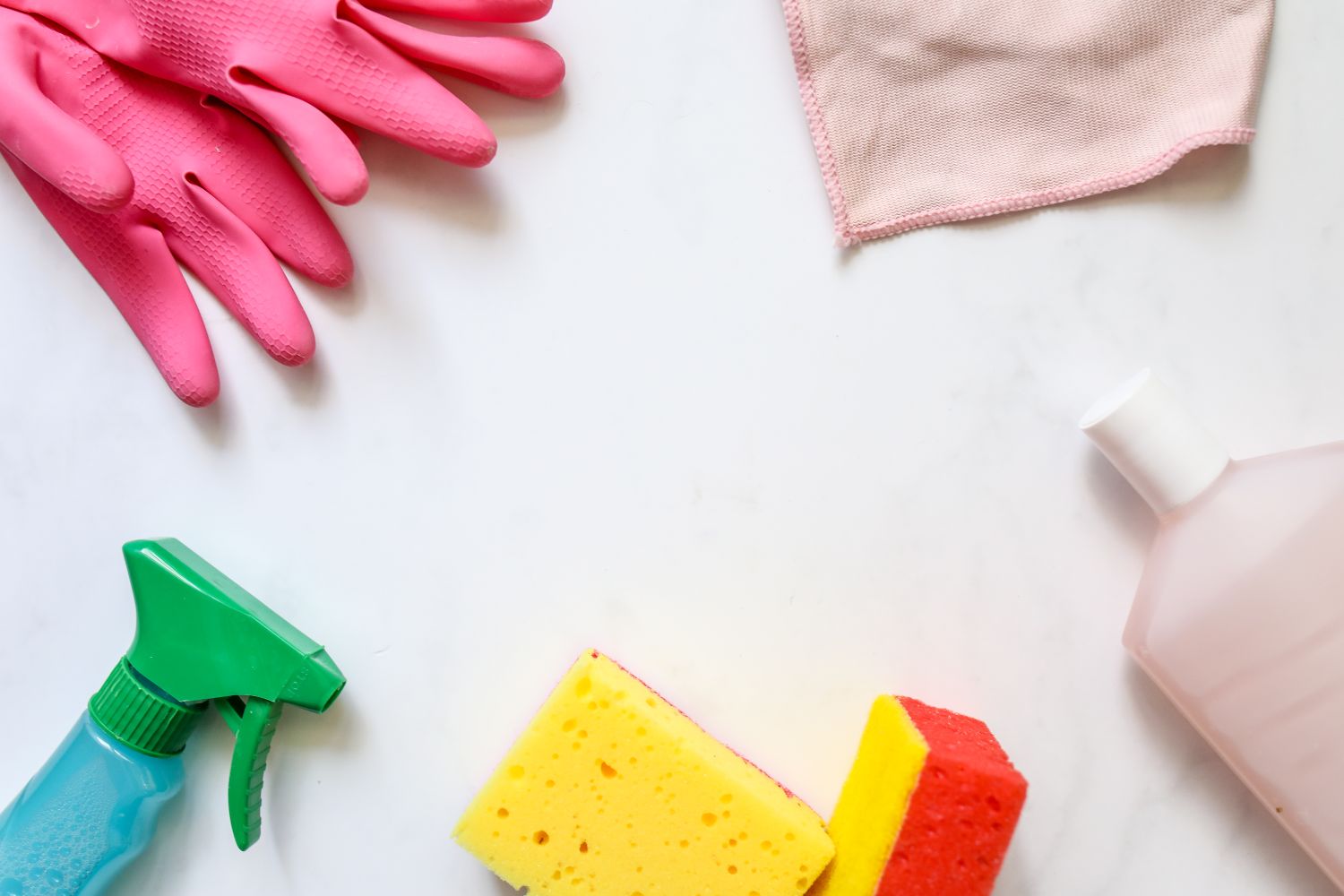
- About a cup of baking soda
- Water
- White vinegar in a spray bottle
- Dish soap (for the racks)
- Rubber gloves
- A plastic scraper or an old plastic card
- A couple of cloths and a non-scratch sponge
Step 1 — Empty the oven and start the racks soaking
Take out the racks, the thermometer, and anything else living in there. Line your bathtub with an old towel so the racks don't scratch the finish, lay them flat, and cover them with hot water and a generous squirt of dish soap. Let them soak while the paste does its work inside the oven — a few hours minimum, overnight is better. By morning most of the grime wipes off with a sponge, and a soft brush handles the corners. Rinse them well and stand them up to dry.
Step 2 — Spread the baking-soda paste
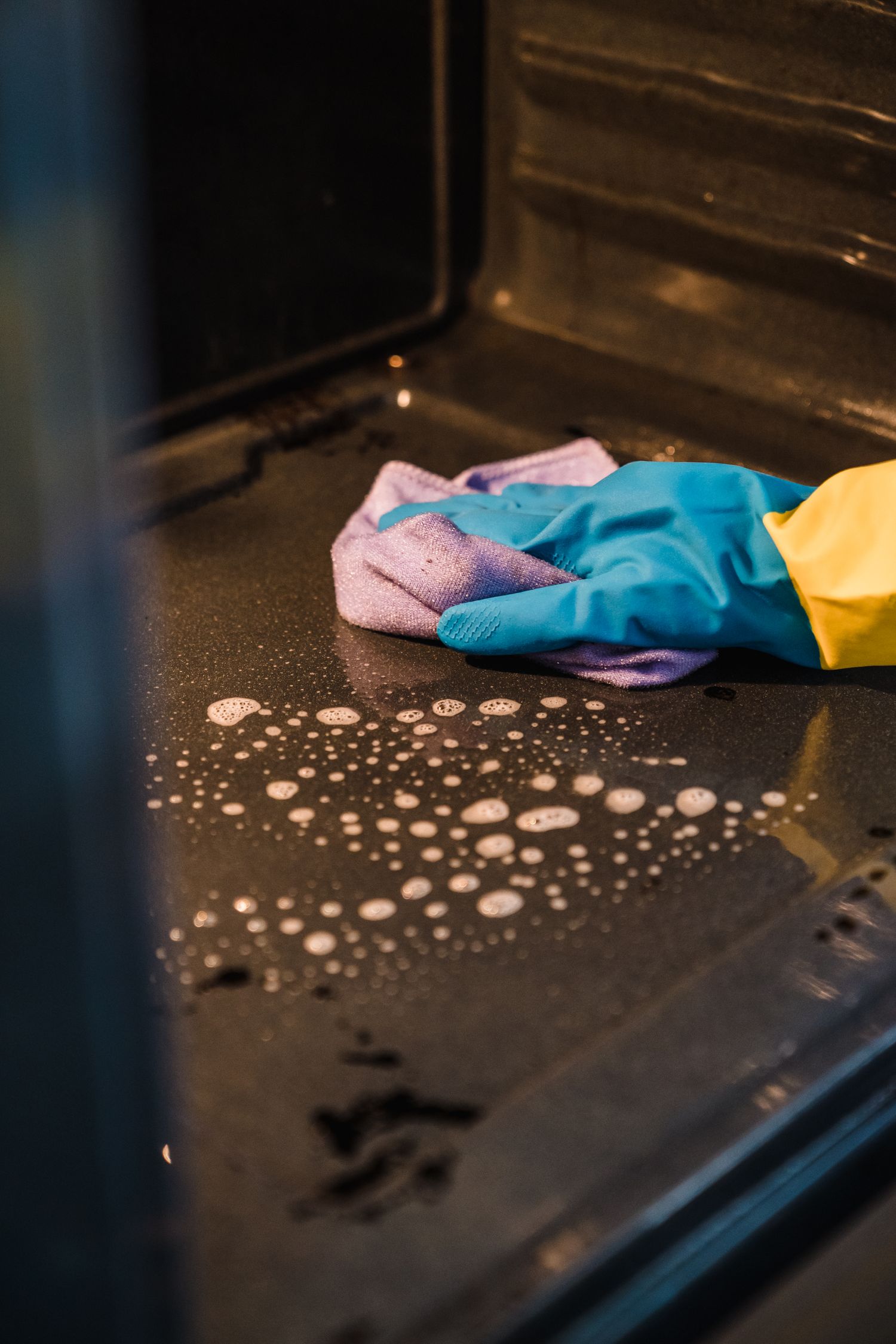
Mix about half a cup of baking soda with two to three tablespoons of water until you have a spreadable paste, roughly the texture of frosting. With gloves on, spread it across the interior: walls, floor, and the ceiling if it's grimy. Keep it off the heating elements — work around, not over, the exposed element at the bottom and the fan opening at the back. Go thicker on the worst spots. The paste will start turning brown almost immediately as it grabs grease; that's it working, not a problem.
Step 3 — Give it the night
Close the door and let the paste sit for at least 12 hours — overnight is the natural rhythm. The oven stays off and cool the entire time. That long dwell time is the whole trick: baking soda is mildly alkaline, and given hours instead of minutes it softens baked-on grease the way a caustic spray does in twenty — just gently, with nothing you need to air the house out over.
Step 4 — Wipe first, then spray vinegar
With a damp cloth, wipe out the bulk of the dried paste, rinsing the cloth as you go. Then spray white vinegar over the chalky streaks that remain. It will fizz softly on contact — that's just baking soda and vinegar producing a little carbon dioxide, completely harmless — and the fizz lifts the last of the film so it wipes away clean. Finish with a pass of plain water and dry the interior.
One hard rule: keep bleach far away from this entire routine. Vinegar and bleach together release chlorine gas, which is genuinely dangerous even in a ventilated kitchen — here's exactly why that combination is never okay. The vinegar-on-baking-soda step above is safe; adding bleach anywhere in the process is not.
Step 5 — The door glass
The inside of the door glass takes the same paste. Spread a layer over the glass, wait 15 to 30 minutes, then scrub with the non-scratch side of a sponge. For hardened drips, use a plastic scraper held at a low angle — not a razor blade. A slipped blade scratches the glass, and scratches in tempered glass are more than cosmetic. And if you see haze between the two panes, that's inside the door itself; it only comes out by disassembling the door per your manual, so don't keep scrubbing the surface hoping it will budge.
The self-clean cycle, honestly
A self-clean (pyrolytic) cycle locks the door and pushes the oven to roughly 800–900°F, incinerating residue into a gray ash you wipe out afterward. It's a legitimate tool — for a moderately dirty oven it beats an afternoon of scrubbing. But go in with clear eyes: it produces real smoke and odor, especially if grease has built up, it heats up the kitchen for hours, and that extreme heat is hard on the oven's own components.
If you run it, follow these rules:
- Take the racks out first. The heat discolors and stiffens most chrome racks — check your manual.
- Wipe out loose debris and pooled grease beforehand. Less fuel, less smoke.
- Ventilate — windows open, hood fan on.
- Stay home and supervise. Starting the cycle and leaving the house is not okay. It's a multi-hour process at extreme temperatures; be there for all of it.
- Mind your pets. The fumes are notoriously dangerous to pet birds — move birds out of the house before running the cycle — and can irritate cats and dogs, so keep them in a ventilated room far from the kitchen.
If your oven is only lightly soiled, or the smoke and heat give you pause, the paste method covers the same ground without any of the drama.
How often should you clean the oven?
Wipe up spills as soon as the oven has cooled — a fresh drip takes ten seconds, a baked-on one takes a scraper. Beyond that, a full paste treatment every three months or so keeps a regularly used oven in shape; roast and broil often and you'll want it more like every six to eight weeks. Do the racks whenever they look filmy. Little and often is the entire strategy: a mostly clean oven never generates the smoke, off flavors, and stuck-on carbon that make this job miserable.
When to call it
If the interior is coated in layered, blackened carbon that shrugs off an overnight paste, the DIY math changes — you're looking at hours of scrubbing for a partial result. That's exactly what the inside-the-oven add-on on a deep clean is for: on a HavenClean deep clean, cleaning inside the oven (and the fridge) is available on request, alongside the degreasing the rest of the kitchen needs. You can get an exact price online in under two minutes — and nothing is charged until after the clean is done.
Ready for a spotless home?
See your price and book a cleaning in under two minutes — no calls, no back-and-forth.
Get your instant price